From LaTeX to Hugo
Every feature of tufte-handout and tufte-book, in Markdown
This page maps every feature of the tufte-handout and tufte-book LaTeX
classes to the Markdown, shortcode or setting that does the same with this
theme, and then shows each shortcode at work. The two ports of the
Tufte-LaTeX samples, the handout and the
book, show them in context.
The table is in “The cheat sheet”, and the live examples start with “Notes”.
The cheat sheet#
The status column says how complete the counterpart is: must and
should features are implemented, could features are extras, and
wont rows explain why a LaTeX feature has no web counterpart. Option
names such as tufte.justified are keys of [params.tufte] in the site
configuration, or of the tufte: map in a page’s front matter. Rows
107–117 are the theorem environments of the amsthm package, which the
classes do not define but mathematical texts load with them.
sidenote, marginnote, footnote, cite, xref, eqref, label, index, footnotemark, newthought, sans, allcaps, smallcaps, sc, textls, nohyphens, paragraph, bibentry, nocite, and marginfigure with inline="true") are written inside a paragraph. Block shortcodes (figure, fig, table, marginblock, equation, footnotetext, bibliography, printindex…) stand alone, with blank lines around them.| # | tufte-latex | tufte.hugo | Status | Notes |
|---|---|---|---|---|
| 1 | \documentclass{tufte-handout} | any page outside a book | must | body class tufte-handout |
| 2 | \documentclass{tufte-book} | a section whose _index.md (or content/_index.md, for a whole-site book) sets book: true | must | its pages are the chapters; see Books |
| 3 | class options (justified, sfsidenotes, nols, marginals…) | [params.tufte] in the site config; tufte: in front matter | must | resolved key by key: page → part → book → site → style preset |
| 4 | “looks like tufte-handout” | tufte.style = "latex" | should | preset: LaTeX title block, hyphenation, indented paragraphs, old-style figures, plainnat, running heads |
| 5 | \sidenote{}, \footnote{} | {{< sidenote >}}…{{< /sidenote >}}, Markdown [^1] | must | tufte-latex’s \footnote is a sidenote; footnote ids are deterministic |
| 5a | a classic footnote (\footnote of the article class) | {{< footnote >}}…{{< /footnote >}}, Markdown [^fn-x] (any [^x] with footnotes = "endnotes") | must | listed below the text, numbered apart from the sidenotes; see Footnotes and sidenotes |
| 6 | \sidenote[num][offset]{} | {{< sidenote number="*" offset="-2bl" >}}…{{< /sidenote >}} | must | a custom number does not step the counter |
| 7 | \marginnote[offset]{}, \marginpar{} | {{< marginnote offset="1bl" >}}…{{< /marginnote >}} | must | |
| 8 | multiple marks (\multfootsep) | automatic | could | adjacent marks (sidenotes and real footnotes) are separated by a comma |
| 9 | \footnotemark + \footnotetext[offset]{} | {{< footnotemark "row3" >}} + standalone {{< footnotetext name="row3" offset="-7bl" >}}…{{< /footnotetext >}} | should | no other numbered note between mark and text |
| 10 | \label on a sidenote (“see note 7”) | {{< sidenote label="sn:x" >}}…{{< /sidenote >}} | should | {{< xref "sn:x" >}} prints its number |
| 11 | block content in the margin | {{< marginblock >}}…{{< /marginblock >}} | should | paragraphs, lists, tables; toggled on mobile |
| 12 | \cite[offset]{a,b} | {{< cite "a,b" >}}, {{< cite "a" "b" >}}, {{< cite keys="a,b" offset="-1bl" >}} | must | the full reference as a numbered sidenote |
| 13 | \cite inside \sidenote, \marginnote, \caption | a nested {{< cite >}}, or cite="a,b" on the note or figure | should | the reference is appended under the note |
| 14 | natbib \citet, \citep, \citeauthor, \citeyear (+ page) | {{< cite keys="a" mode="text" page="42" >}}; modes text, paren, author, year | could | inline text, no sidenote |
| 15 | \bibentry{key} | {{< bibentry "key" >}} | must | the formatted entry, inline |
| 16 | \bibliography{f} + \bibliographystyle | automatic at the end of a handout; {{< bibliography >}} anywhere (standalone) | must | tufte.bibliography.style = "tufte" (citation order) or "plainnat" (sorted; with nobib the [n] follow the sorted list) |
| 17 | \nobibliography | tufte: {bibliography: {list: false}} | must | |
| 18 | \nocite{a}, \nocite{*} | {{< nocite "a,b" >}}, {{< nocite "*" >}}, front matter nocite: [a] | should | |
| 19 | class option nobib | tufte.bibliography.margin = false | should | a citation becomes [n], linked to the list (numbered in the order of bibliography.style) |
| 20 | .bib database | data/bibliography.yaml (native), data/bibliography.json (CSL-JSON), front matter bibliography: refs.json or references: | must | see Bibliography |
| 21 | .bib read directly | bibliography: refs.bib (page resource or asset) | could | a simple BibTeX reader; pandoc → CSL-JSON is more robust |
| 22 | \doi{}, \url{} in entries | fields doi, url | must | rendered as links |
| 23 | figure + \caption + \label | {{< figure src="…" caption="…" label="fig:x" >}};  + {#fig:x}; {{< fig src="…" label="fig:x" >}}caption{{< /fig >}} | must | “Figure N:” starts the margin caption |
| 24 | \caption[short]{} | short="…" | should | used in the list of figures |
| 25 | \caption[][offset]{} | offset="1bl" | should | |
| 26 | \setfloatalignment{b}, [b] | captionpos="bottom" | should | caption aligned with the bottom of the float |
| 27 | figure* | {{< fullwidthfigure >}}, type="fullwidth", {.fullwidth} | must | the caption floats in the margin column |
| 28 | marginfigure[offset] | {{< marginfigure offset="…" label="…" >}}, {{< fig type="margin" >}} | must | |
| 29 | figure without caption | any figure without caption | must | unnumbered |
| 30 | table + \caption | {{< table caption="…" label="tab:x" >}} + a Markdown table; a Markdown table + {#tab:x caption="…"} | must | its own counter |
| 31 | table* | {{< fullwidthtable >}}, {{< table type="fullwidth" >}} | should | |
| 32 | margintable[offset] | {{< margintable caption="…" offset="…" >}}…{{< /margintable >}} | should | |
| 33 | booktabs | Markdown tables | should | rules come from the CSS; \cmidrule and \multicolumn are wont (no Markdown syntax) |
| 34 | algorithm / listing floats | {{< listing caption="…" label="lst:x" style="ruled" >}} + a fenced code block | could | styles plain, ruled, boxed |
| 35 | subfigures, \fbox image grids | {{< subfigures cols=2 type="fullwidth" caption="…" >}} with images on consecutive lines | could | linked images (thumbnails) keep their link and subcaption |
| 36 | \ref | {{< xref "fig:x" >}} | must | forward references work |
| 37 | Figure~\ref{fig:x} | {{< xref "fig:x" "full" >}} | must | with a non-breaking space |
| 38 | \nameref | {{< xref "sec:x" "name" >}} | must | |
| 39 | \pageref | {{< xref "err:x" "page" >}} | should | the enclosing section title; in a book, the chapter title for a target in another chapter |
| 40 | \eqref | {{< eqref "eq:x" >}} | should | “(3)” |
| 41 | \label anywhere | {{< label "err:x" >}} | should | |
| 42 | \listoffigures, \listoftables | {{< listoffigures >}}, {{< listoftables >}}, {{< listoflistings >}} (standalone) | should | the whole book inside a book, else the page |
| 43 | numbered equations + \label | $$ … \label{eq:x} $$, {{< equation label="eq:x" >}}…{{< /equation >}} | should | |
| 44 | \chapter{}, \chapter[short]{} | a page of the book: title, linkTitle | must | |
| 45 | \chapter*{} | unnumbered: true | should | |
| 46 | \part{} | a sub-section (_index.md) inside the book | should | roman numerals |
| 47 | \frontmatter, \mainmatter, \backmatter | matter: front, main, back | should | only main matter is numbered |
| 48 | \appendix | matter: appendix | should | lettered A, B, … |
| 49 | \tableofcontents (book) | automatic on the book’s landing page; {{< tableofcontents >}} | must | italic, no leaders |
| 50 | \tableofcontents (handout) | front matter toc: true; {{< tableofcontents >}} | must | |
| 51 | \maketitle (full title page) | the book’s landing page | must | tufte.book.titlepage |
| 52 | \maketitle (handout title block) | tufte.titleBlock = "latex" | should | italic author and date lines |
| 53 | \title[plain], \author[plain], \publisher | title, linkTitle, author, publisher, publisherPlain | should | |
| 54 | \date{}, \date{text} | showDate: false, dateText: "Spring 2026" | should | date stays the sort key |
| 55 | \thanks | thanks: "…", author: [{name: …, thanks: …}] | should | a sidenote in the title |
| 56 | abstract environment | front matter abstract:, {{< abstract >}}…{{< /abstract >}} | should | |
| 57 | \openepigraph, epigraph pages | book root epigraphs:; {{< epigraph style="open" >}} | should | |
| 58 | epigraph (tufte-css) | {{< epigraph >}} | must | |
| 59 | copyright page | book root copyrightPage: | should | Markdown string or {year, holder, publisher, url, license, printing} |
| 60 | dedication | book root dedication: | should | |
| 61 | frontispiece | book root frontispiece: {src, alt, caption} | could | an unnumbered figure, caption in the margin, before the title page |
| 62 | \blankpage, \cleardoublepage, \clearpage | {{< clearpage >}}; halftitle: true | could | print only |
| 63 | running heads (fancyhdr) | tufte.print.runningHeads = true | could | print only, Chromium ≥ 131 |
| 64 | the book printed as one PDF | book root outputs: [html, rss, print] → …/print.html | should | see Printing |
| 65 | \index{…} with !, @, |see{}, |seealso{}, |(, |) | {{< index "classes!a4paper" >}}, same syntax | should | |
| 66 | \printindex | {{< printindex >}} (standalone) | should | three columns |
| 67 | the index as a site taxonomy | — | wont | /index/ clashes with Hugo’s index files; use the shortcode |
| 68 | counters continuous across a book | tufte.book.continuous = true (default) | should | |
| 69 | \section, \subsection (italic, unnumbered) | ##, ### | must | in \Large and \large (1.68rem, 1.54rem) with style = "latex" or titleBlock = "latex", below the title; tufte.css’s sizes otherwise |
| 70 | \paragraph{} (run-in) | #### Title, or {{< paragraph >}}Title{{< /paragraph >}} | should | |
| 71 | no \subsubsection | a warning on #####/######; tufte.headings.strict = true makes it an error | should | Bringhurst §4.2.2 |
| 72 | secnumdepth | tufte.headings.number = 0, 1 or 2; {.unnumbered} | could | |
| 73 | \section[short]{} in the TOC | — | wont | Hugo builds its TOC from the headings themselves |
| 74 | \newthought{} | {{< newthought >}}…{{< /newthought >}} | must | |
| 75 | \tuftebreak, \tufteskip | {{< tuftebreak >}} | could | |
| 76 | \allcaps{} | {{< allcaps >}}…{{< /allcaps >}}, {{< allcaps "nasa" />}} | must | |
| 77 | \smallcaps{} | {{< smallcaps >}}…{{< /smallcaps >}} | must | |
| 78 | \textsc{} | {{< sc >}}…{{< /sc >}} | should | |
| 79 | \textls[n]{} | {{< textls "100" >}}…{{< /textls >}} | could | thousandths of an em, or a CSS length |
| 80 | ls, nols | tufte.letterspacing | should | |
| 81 | \textsf, \sffamily | {{< sans >}}…{{< /sans >}} | must | |
| 82 | justified, ragged right, hyphenation | tufte.justified, tufte.hyphenate, {.justify}, {.raggedleft} | must | |
| 83 | sidenote=, marginnote=, caption=, citation=, marginals= | tufte.marginals, tufte.sidenote.align, … | should | |
| 84 | \setsidenotefont and friends | tufte.sidenote.font = "italic sans" | should | words: italic upright sans serif mono small smaller normal #hex |
| 85 | sfsidenotes | tufte.sfsidenotes = true | must | |
| 86 | book \parindent paragraphs | tufte.indent = true | should | |
| 87 | old-style figures (mathpazo osf) | tufte.numerals = "oldstyle" | could | |
| 88 | fonts, nofonts | params.etBook | must | |
| 89 | fullwidth environment | {{< fullwidth >}}…{{< /fullwidth >}} | must | |
| 90 | quote, quotation | Markdown >; {{< blockquote >}} | must | |
| 91 | verse | {{< verse >}}…{{< /verse >}} | should | |
| 92 | description lists | Markdown definition lists | should | |
| 93 | math | KaTeX: $…$, $$…$$, \(…\), \[…\] | must | see Math |
| 94 | \nohyphens{}, \nohyphenation | {{< nohyphens >}}…{{< /nohyphens >}}, {.nohyphens} | could | |
| 95 | \FloatBarrier | {{< clearmargin >}} | could | clear: right |
| 96 | debug option | tufte.debug = true | could | outlines and extra warnings |
| 97 | letter, a4paper, b5paper | tufte.print.paper = "letter", "a4", "b5" | must | geometry from tufte-common.def |
| 98 | symmetric, \forcerectofloat, \forceversofloat | — | wont | a screen has no spreads, and a float cannot change side per printed page |
| 99 | twoside, oneside | — | wont | folded into running heads: a book alternates (book title on left pages, chapter title on right pages); a handout prints its title and the page number at the top right of every page but the first |
| 100 | bidi | the language’s direction (<html dir>) | could | |
| 101 | hyper, colorlinks, PDF metadata | — | wont | links are native; colours via customCSS; metadata is in <head> |
| 102 | tufte-*-local.tex hooks | params.customCSS, the *_custom.html partials | must | body classes tufte-book/tufte-handout allow scoping |
| 103 | \hangp, \hangleft, \hangstar | — | wont | sample-book macros, not class features; CSS hanging-punctuation (Safari only) is used |
| 104 | setspace doublespace | — | wont | loaded by tufte-common.def, but it is a general line-spacing package, not a class feature: set the leading with CSS (line-height) through customCSS |
| 105 | doc macros (\doccmd…), text shortcuts (\TL, \monthyear) | inline code, your own shortcodes | wont | not class features |
| 106 | TeX machinery (\morefloats, engine detection, \TufteRecalculate, other paper options) | — | wont | no meaning in HTML |
| 107 | amsthm \newtheorem{k}{Word} | {{< theorem >}}…{{< /theorem >}}, lemma, proposition, corollary, definition, example, remark; any kind with {{< thm "k" >}}…{{< /thm >}}; tufte.theorems.kinds.k.name | should | the amsthm package, not a class feature; see Theorems and proofs |
| 108 | amsthm \newtheorem*{k}{Word} | tufte.theorems.kinds.k.numbered = false; numbered=false on one theorem | should | |
| 109 | amsthm \newtheorem{k}[c]{Word} (shared counter) | tufte.theorems.kinds.k.counter = "c" | should | every kind shares theorem by default (tufte.theorems.shared), as in amsart.template |
| 110 | amsthm \newtheorem{k}{Word}[section], \numberwithin | tufte.theorems.kinds.c.within, tufte.theorems.within: "section", "chapter", "none", "auto" | should | auto: per chapter in a book with numbered chapters or book.continuous = false (without numberChapters every chapter restarts at 1, no prefix), else through the page or the book |
| 111 | amsthm \theoremstyle{plain|definition|remark} | tufte.theorems.kinds.k.style; style= on one theorem | should | |
| 112 | \begin{theorem}[note] + \label | {{< theorem "note" "thm:x" >}}…{{< /theorem >}}, {{< lemma note="…" label="lem:x" >}} | should | the note in parentheses after the number; a {{< label "thm:x" >}} in the body refers to the theorem too |
| 113 | amsthm proof, \begin{proof}[Head] | {{< proof >}}…{{< /proof >}}, {{< proof "Head" >}}, {{< proof of="thm:x" >}} | should | “Proof of Theorem 2.1.” |
| 114 | \qedhere, \qedsymbol | {{< qedhere >}}, \qedhere in display math; tufte.theorems.qed, qed= | should | blacksquare ■ (css), openbox □ (latex), none or any text |
| 115 | \ref, cleveref \cref, \nameref to a theorem | {{< xref "thm:x" >}}, {{< xref "thm:x" "full" >}}, {{< xref "thm:x" "name" >}} | should | “2.1”, “Theorem 2.1”, the note |
| 116 | thmtools \listoftheorems | {{< listoftheorems >}} (standalone) | should | kinds="theorem,lemma", heading="" |
| 117 | \swapnumbers, \newtheoremstyle, thmtools restatable | — | wont | heads come in two looks (tufte.theorems.look: tufte, amsthm); restyle one kind with thm-kind-k in customCSS |
| 118 | \usepackage{euler}, eulervm | [params.math] font = "euler"; front matter mathFont: euler | could | MathML set in the bundled Euler Math font; text and \text{…} stay in ET Book |
| 119 | \usepackage{libertinus}, libertinus-otf | [params] font = "libertinus" and [params.math] font = "libertinus"; front matter font, mathFont | could | Libertinus Serif, Sans and Mono for the text, Libertinus Math (MathML) for the formulas |
| 120 | Beamer slides of a handout | outputs: ["html", "slides"]: slides.html, a reveal.js deck | could | a slide at each ## and ---; {{< notes >}} for speaker notes |
| 121 | \usepackage{sourceserifpro}, sourcesanspro, sourcecodepro | [params] font = "source"; front matter font | could | Source Serif 4 for the text, Source Sans 3 for the sans-serif; Source Code Pro is the code font of every page but Libertinus’s |
Notes#
A sidenote can carry a label, like LaTeX’s \label inside \sidenote.This is the labelled sidenote. Its number is printed wherever it is referenced. A note may contain other inline shortcodes: a reference to Figure 2, or Small Caps. The text can then refer to Note 1, or simply to note 1. A margin note can be moved down by two baselinesThis margin note was written with offset="2bl". or up with a negative offset, and a Markdown footnote becomes a sidenote.Written as [^fn], like \footnote in LaTeX.
tufte-latex has no classic footnotes: its \footnote is a sidenote. When a
note belongs below the text, as in a standard LaTeX article, the footnote
shortcodea
and Markdown footnotes whose label starts with fn-b give one,
next to the sidenotes.
A margin block holds block content:
- a list,
- a second paragraph,
- or a small table.
It is LaTeX’s \marginpar with a minipage inside.
The margin block next to this paragraph is a marginblock shortcode. Like every
float, it is anchored where it is written, so it is placed between paragraphs.
A table can carry note marks whose text is set apart, as with \footnotemark
and \footnotetext:
| Paper | Text width | Margin |
|---|---|---|
| letter | 26 pc | 12 pc |
| a4 | 107 mm | 49.4 mm |
The width of the main text block, from tufte-common.def.
Citations#
A citation is a numbered sidenote with the full reference,Edward R. Tufte. The Visual Display of Quantitative Information. Graphics Press, Cheshire, Connecticut, 2001. ISBN 0-9613921-4-2
several keys can be cited at once,Edward R. Tufte. Envisioning Information. Graphics Press, Cheshire, Connecticut, 1990. ISBN 0-9613921-1-8; and Edward R. Tufte. Visual Explanations. Graphics Press, Cheshire, Connecticut, 1997. ISBN 0-9613921-2-6 and the note
can be moved like any other.Edward R. Tufte. Beautiful Evidence. Graphics Press, LLC, first edition, May 2006. ISBN 0-9613921-7-7; and Robert Bringhurst. The Elements of Typography. Hartley & Marks, 3.1 edition, 2005. ISBN 0-88179-205-5
In the natbib style, Tufte (1990) prints the author
and year in the text, and (Tufte 2001, p. 92)
puts them in parentheses. The full entry can also be written inline:
Robert Bringhurst. The Elements of Typography. Hartley & Marks, 3.1 edition, 2005. ISBN 0-88179-205-5. The book by Mittelbach and Goossens is in the
bibliography below without being cited, thanks to nocite.
Floats#
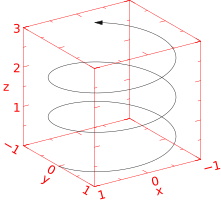 Figure 1: A margin figure whose caption cites a book: the helix , .Edward R. Tufte. Visual Explanations. Graphics Press, Cheshire, Connecticut, 1997. ISBN 0-9613921-2-6
Figures and tables are numbered automatically as soon as the page has a
labelled float or equation, or any cross-reference (xref or eqref, to
anything, a section included); tufte.floats.number = false turns this off. The margin figure here is Figure 1;
its caption contains a nested citation.
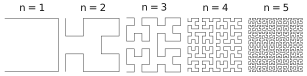
A plain Markdown image becomes a numbered figure when it has a title and an id:

{#fig:demo-sine .fullwidth} on the next line.That was Figure 3.
Table 2: A margin table.
| n | n² |
|---|---|
| 1 | 1 |
| 2 | 4 |
| 3 | 9 |
Table 2 sits in the margin. The next one spans the
whole page, like table*:
| Paper | Page size | Margins (top right bottom left) | Text column | Margin column |
|---|---|---|---|---|
| letter | 8.5 × 11 in | 1in 0.86in 1.48in 1in | 65% | 30% |
| a4 | 210 × 297 mm | 27.4mm 20.6mm 28.2mm 24.8mm | 65% | 30% |
| b5 | 176 × 250 mm | 28.7mm 14.69mm 34.1mm 14.66mm | 70% | 25% |
ruled style.func main() {
fmt.Println("Hello, Tufte")
}

With type="margin" the grid is a margin figure, its caption below it:
(a) Envisioning Information(b) Beautiful EvidenceFigure 5: The same title pages as a grid in the margin.
The lists of figures and tables of this page:
List of Figures
List of Tables
List of Listings
Cross-references#
A reference prints a number (2), a number with its
name (Figure 2), the caption or the title
(“Notes”), or the place where the target is
(Cross-references). Forward references work: equation
(1) is defined in the next section. An arbitrary point
of the text gets a label with the label shortcode, like here.
Equations#
A display equation with \label is numbered:
So is one written with the equation shortcode:
Theorems#
The theorem environments of amsthm are block shortcodes, written
{{< theorem "Euler" "thm:demo-euler" >}} (the note, then the label) and
{{< proof >}}:
Theorem 1 (Euler). For every real , .
Proof. Split the power series of into its even and odd terms:
■At , Theorem 1 gives
(2). The \qedhere in the display puts the
end-of-proof symbol at its right end. Theorems and Proofs
shows the other kinds, shared counters, numbering within sections and the
list of theorems.
Typography#
Letterspacing is applied to all capitals, to Small Capitals, to Mixed Small Caps and, on request, to any text. A word can be protected from hyphenation: incomprehensibilities. The one-line form nasa works too.
Run-in heading#
A level-four heading is set in italics at the start of its paragraph, like
LaTeX’s \paragraph.
Run-in shortcode The paragraph shortcode
does the same inside a paragraph.
This paragraph is justified and hyphenated with the {.justify} attribute,
whatever the site setting, which is how a single paragraph can follow the
justified class option of LaTeX while the rest of the page is set ragged
right.
Tyger Tyger, burning bright,
In the forests of the night;
What immortal hand or eye,
Could frame thy fearful symmetry?
In what distant deeps or skies.
Burnt the fire of thine eyes?
A designer knows that he has achieved perfection not when there is nothing left to add, but when there is nothing left to take away.
The clearmargin shortcode above pushes this paragraph below everything that
is still in the margin, like \FloatBarrier; clearpage starts a new page
when printing.
Index#
Index entries use the syntax of makeindex: levels separated by !,
a sort key before @, cross-references with
|see{…} and page ranges with |( and |).
The quote character " makes the next !, @, | or " literal: {{< index `index!quote "!` >}}
lists “quote !” under “index”.
The index of this page:
Index
- index
- letterspacing, Typography
- makeindex, see index
- typography
- clearing floats, Typography
The references below are written with {{< bibliography heading="Works cited" >}}
instead of the automatic list, which a handout leaves out when it has its own
bibliography shortcode; all=true would list every entry of the database.
Works cited
- Edward R. Tufte. The Visual Display of Quantitative Information. Graphics Press, Cheshire, Connecticut, 2001. ISBN 0-9613921-4-2.
- Edward R. Tufte. Envisioning Information. Graphics Press, Cheshire, Connecticut, 1990. ISBN 0-9613921-1-8.
- Edward R. Tufte. Visual Explanations. Graphics Press, Cheshire, Connecticut, 1997. ISBN 0-9613921-2-6.
- Edward R. Tufte. Beautiful Evidence. Graphics Press, LLC, first edition, May 2006. ISBN 0-9613921-7-7.
- Robert Bringhurst. The Elements of Typography. Hartley & Marks, 3.1 edition, 2005. ISBN 0-88179-205-5.
- Frank Mittelbach and Michel Goossens. The LaTeX Companion. Addison–Wesley, second edition, 2004. ISBN 0-201-36299-6.