Chapter 1
Margins
The margin is where Tufte’s books keep their notes.The margin column is 27.5% of the page wide on screen. Chapter numbers come from the order of the chapters in the book, not from their dates. Knuth’s line-breaking algorithmDonald E. Knuth and Michael F. Plass. Breaking Paragraphs into Lines. Software: Practice and Experience, 11(11):1119–1184, 1981. doi: 10.1002/spe.4380111102 and his book on TeXDonald E. Knuth. The TeXbook. Addison–Wesley, Reading, Massachusetts, January 1984. ISBN 0-201-13448-9 come from the book’s own refs.bib.
A numbered figure#
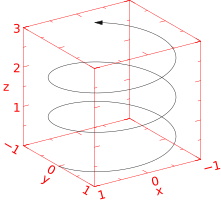 Figure 1: A helix, figure number 1 of the book.
Figures are numbered through the whole book: the sine wave in the next chapter is Figure 2, while this helix is Figure 1.
Equations#
Equation numbers continue across chapters too:
(1)The next chapter refers back to (1).
Theorems#
Theorems are numbered within the chapter in a book with numbered chapters,
as \newtheorem{theorem}{Theorem}[chapter] does in amsbook: this
chapter’s theorem and lemma are 1.1 and 1.2.
Theorem 1.1 (Margin width). On a wide screen, the margin column is 27.5% of the page wide.
Proof. A paragraph is 55% of the page wide, and by Lemma 1.2 a note is half as wide as its paragraph. ■
Lemma 1.2. A sidenote or a margin note is half as wide as the paragraph it belongs to.
Proof. Tufte CSS floats the note to the right of its paragraph with width: 50%
and a negative right margin of 60%. ■